
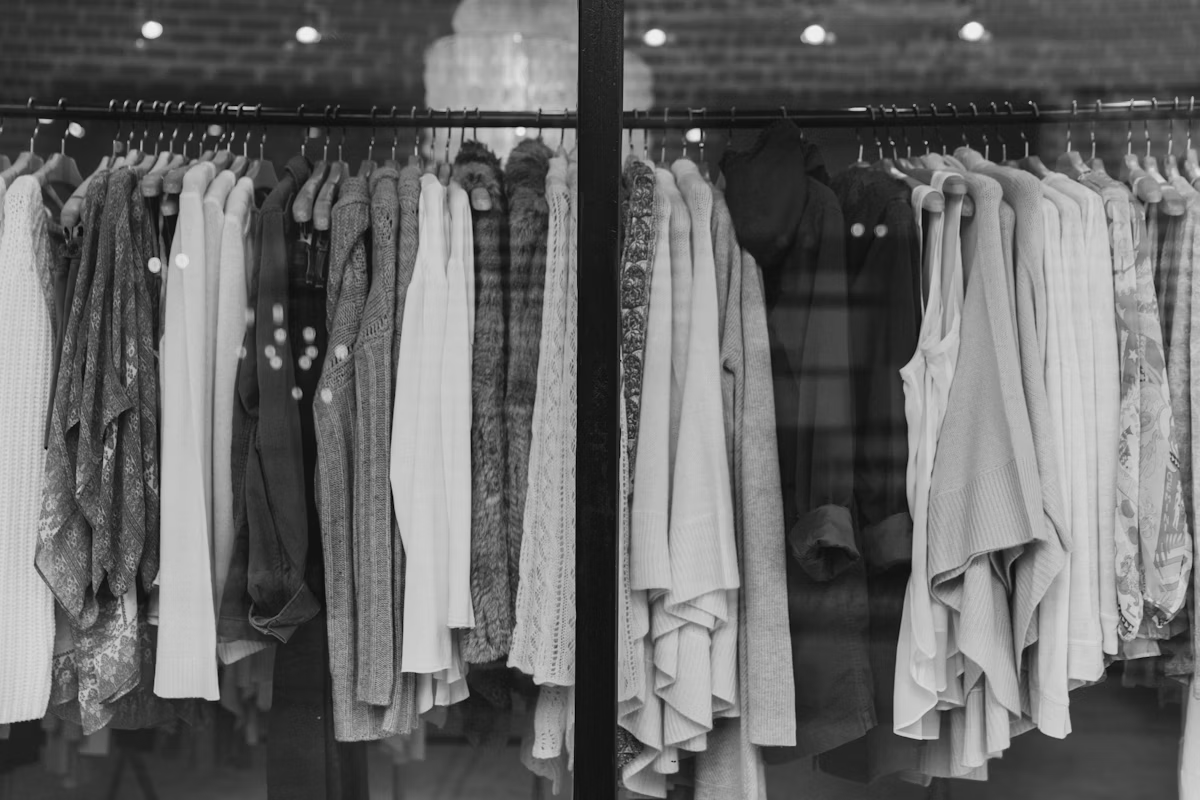
We have all been tempted by a glaring red “SALE” sign in a store window. You walk into a fast-fashion retailer and walk out with two massive shopping bags, having spent less than a hundred dollars. It feels like a massive victory in the moment—until two weeks later. After a single trip through the washing machine, that trendy top has a twisted side seam, the sweater is pilling aggressively, and a button has mysteriously vanished. Suddenly, that incredible “bargain” doesn’t feel like such a great deal anymore.
This is the modern fashion dilemma, and the only true escape from it is shifting your mindset entirely. It is time to embrace the philosophy of investing in quality over quantity, and understanding exactly why less is truly more in the world of fashion.
The Illusion of the Fast Fashion Bargain
The current fashion industry largely operates on a model of hyper-consumption. We are constantly conditioned by social media to believe that an outfit should only be worn once, driving an insatiable craving for the “new.” This relentless cycle pushes brands to produce garments at breakneck speeds, heavily relying on inferior materials and poor manufacturing practices to keep costs impossibly low.
The result? Closets bursting at the seams with clothing, yet the persistent, nagging feeling of having absolutely nothing to wear. When you buy a $15 t-shirt, you aren’t just paying for the fabric; you are paying for the incredibly short lifespan of that garment. You will likely have to replace it three or four times in a single year as it stretches, fades, and tears, completely negating any initial savings you thought you made.
Understanding the “Cost Per Wear” Equation
The single most important concept to grasp when building a sustainable, high-quality wardrobe is “cost per wear.” This simple mathematical equation completely transforms how you view price tags and budget for your closet.
Cost per wear is calculated by taking the total cost of an item and dividing it by the estimated number of times you will actually wear it. For example, let’s say you buy a cheap, trendy pair of boots for $40. They are incredibly uncomfortable, they let the rain in, and the heel snaps off after you wear them just four times. Your cost per wear is $10.
Now, imagine you invest $300 in a beautiful, handcrafted pair of leather boots. You take care of them, resole them when necessary, and wear them 100 times over the next five years. Your cost per wear is just $3. The expensive boots were actually the much cheaper purchase in the long run.
How to Actually Spot a Quality Garment
Transitioning to a “quality over quantity” mindset means you need to become a highly educated consumer. You can no longer just look at the silhouette on the hanger; you have to look closely at the construction.
Next time you are shopping, pay close attention to the fabric composition tag. Natural fibers like 100% cotton, linen, silk, wool, and cashmere will always age better, breathe easier, and last longer than cheap synthetics like polyester or acrylic, which are prone to holding odors and pilling instantly.
Look closely at the seams. Are they straight? Are there loose threads hanging everywhere? Gently pull the fabric on either side of a seam—if it instantly separates and you can see the thread pulling, the garment will not hold up to regular wear. Finally, check for extra details: does the blazer have a proper lining? Does the shirt come with spare buttons sewn into the inner tag? These small details are the hallmarks of a manufacturer who expects their garment to be worn for years.
The Psychological Benefit of Owning Less
Beyond the clear financial savings and the massive environmental benefits of buying less, there is a profound psychological shift that happens when you upgrade the standard of your wardrobe.
When your closet is filled exclusively with high-quality pieces that fit you perfectly and feel luxurious against your skin, getting dressed transforms from a stressful chore into an act of self-care. You step out the door carrying yourself differently. There is a quiet, undeniable confidence that comes from wearing a beautifully tailored wool coat or a perfectly draped silk blouse. You stop frantically chasing fleeting micro-trends and start curating a timeless personal uniform that communicates exactly who you are to the world.
Transitioning your wardrobe from a fast-fashion free-for-all to a curated collection of high-quality investments doesn’t happen overnight. It requires patience and a willingness to save up for the pieces you truly want. But once you experience the ease and elegance of owning fewer, better things, you will never look back.