
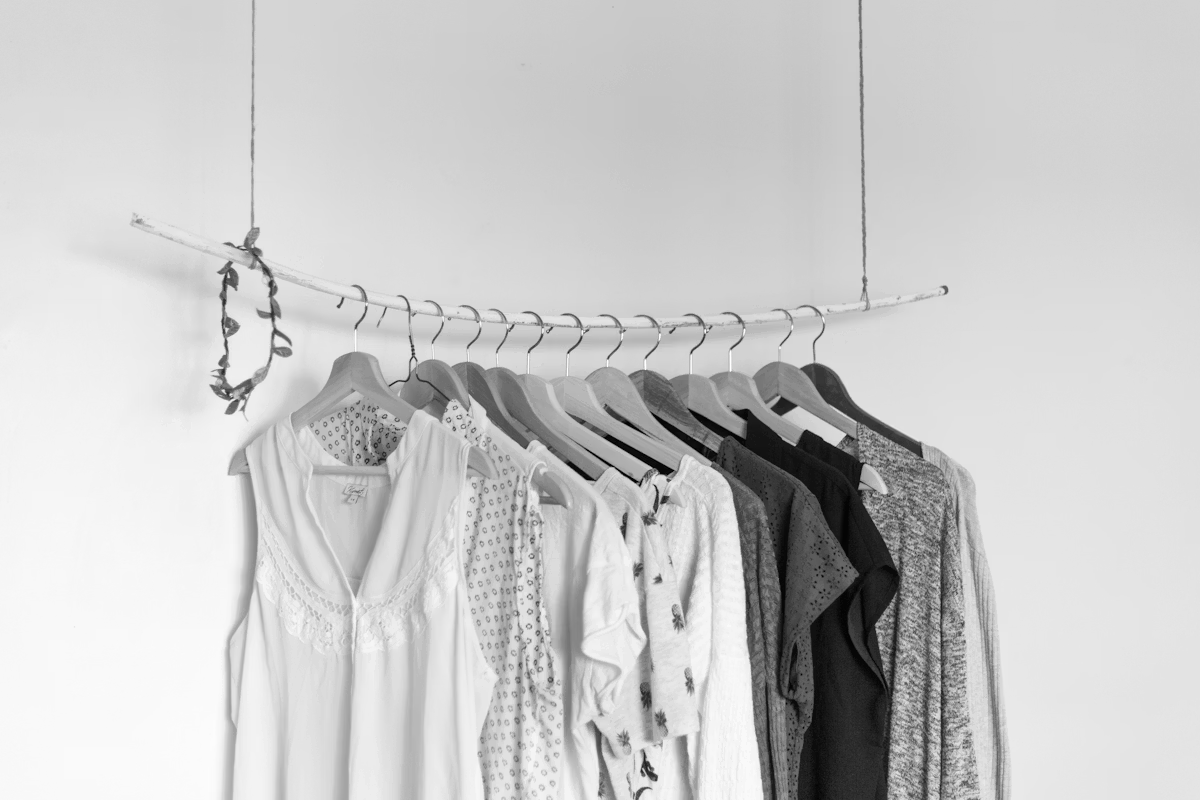
If you have been following the evolution of modern style, you have likely noticed two massive movements dominating the conversation: the rise of the minimalist capsule wardrobe and the urgent push for sustainable, eco-friendly fashion. At first glance, they might seem like two separate trends. One is primarily focused on aesthetics, organization, and reducing daily decision fatigue, while the other is focused on ethics, environmental impact, and supply chains.
However, when you look a little closer, you realize that these two concepts are actually two sides of the exact same coin. In fact, it is nearly impossible to build a true capsule wardrobe without inherently becoming more sustainable, and it is incredibly difficult to be a sustainable shopper without eventually adopting a capsule mentality. When you intentionally combine these two philosophies, you unlock the ultimate eco-friendly closet. Here is why the sustainable capsule wardrobe is the future of fashion, and exactly how you can build one.
The Natural Synergy: Why Less is Automatically Greener
The core premise of a capsule wardrobe is radical downsizing. You are actively choosing to live with a highly curated collection of versatile items—usually around 30 to 50 pieces—rather than a chaotic closet stuffed with hundreds of unworn garments.
By simply choosing to buy less and own less, you are instantly practicing sustainability. The most significant environmental impact of the fashion industry comes from the sheer volume of production. The water required to grow conventional cotton, the petroleum used to manufacture polyester, and the carbon emissions from global shipping are all driven by our relentless demand for more. When you commit to a capsule wardrobe, you step off the fast-fashion treadmill. You drastically reduce your personal demand for new goods, which directly lowers your fashion carbon footprint.
The Foundation: Investing in Ethical Quality
Because a capsule wardrobe relies on a small number of garments, those pieces are going to be worn on heavy rotation. A single white button-down shirt might be worn twice a week, every single week, for years.
Fast fashion simply cannot survive this level of wear. A cheap, $10 synthetic shirt will pill, stretch, and fall apart after a month of heavy capsule use. Therefore, a successful capsule wardrobe forces you to invest in high-quality, durable garments. When you shift your budget from buying twenty cheap items to buying three incredible ones, you open the door to supporting ethical, sustainable brands. You can afford to pay a premium for a sweater crafted by workers who are paid a fair living wage, or a pair of trousers made by a brand committed to zero-waste manufacturing.
Selecting the Right Eco-Friendly Fabrics
When merging these two philosophies, reading the fabric label becomes your most important skill. Your capsule pieces need to be durable, breathable, and ideally, biodegradable at the end of their lifecycle.
When selecting your core basics—like t-shirts, blazers, and trousers—prioritize high-quality natural fibers. Look for GOTS-certified organic cotton, which uses vastly less water and no toxic pesticides. Embrace heavy-weight linen and hemp for the summer months, as these are incredibly resilient plant fibers that actually soften and improve with age. For your winter layers, seek out responsibly sourced wool or recycled cashmere. By avoiding virgin synthetics like polyester and acrylic, you ensure your capsule wardrobe isn’t shedding toxic microplastics into the water supply every time you do laundry.
Building the Capsule Through the Secondhand Market
You do not need to spend thousands of dollars on expensive eco-boutiques to build a sustainable capsule wardrobe. The most environmentally friendly garments are the ones that already exist in the world.
The secondhand market is the perfect place to hunt for your capsule essentials. Because you are looking for timeless, classic silhouettes—like a perfectly tailored trench coat, a vintage Levi’s denim jacket, or a classic silk slip dress—these pieces are abundant in vintage shops and high-end consignment stores. Buying vintage guarantees that your capsule is entirely unique to you, features superior historical craftsmanship, and requires absolutely zero new resources to produce.
The End of the Lifecycle
The final, beautiful synergy between a capsule wardrobe and sustainability happens when a garment finally reaches the end of its life. Even with meticulous care and tailoring, clothes eventually wear out.
If your capsule wardrobe is built entirely on cheap synthetic blends, those worn-out clothes will sit in a landfill for centuries. However, if you built your capsule using 100% natural fibers like organic cotton, silk, and linen, those garments can literally be composted and returned to the earth safely.
Merging a capsule wardrobe with sustainable principles completely transforms your relationship with clothing. You stop seeing your clothes as disposable trends and start viewing them as trusted companions, ethically sourced and built to last a lifetime.nd actively participate in circular fashion. It proves that refreshing your personal style doesn’t have to cost the earth—sometimes, the perfect addition to your closet is just sitting at the bottom of your best friend’s “donate” pile.